 Near Field Communication (NFC) products Online Store
 Worldwide Shipping (free DE shipping)

Digital Travel with NFC & RFID

The way we travel has changed fundamentally in recent years. From the moment we begin our journey at the airport, through check-in at the hotel, to visits to museums, we are accompanied by digital technology. Radio Frequency Identification (RFID) technology and Near Field Communication (NFC) in particular play a central role, as they enable the fast, contactless, and more secure exchange of information. As a result, a fundamental modernization of our daily lives—and our travels—has taken place. Whether it’s digital tickets, electronic ID documents, or contactless payments: many processes that used to require time and paper are now automated and conveniently handled via smartphones or integrated chips. This makes travel not only more efficient but also safer and more flexible.
This article explores how NFC and RFID are revolutionizing travel—from planning to arrival at the destination—and examines the benefits as well as the challenges these technologies present.
Electronic Tickets
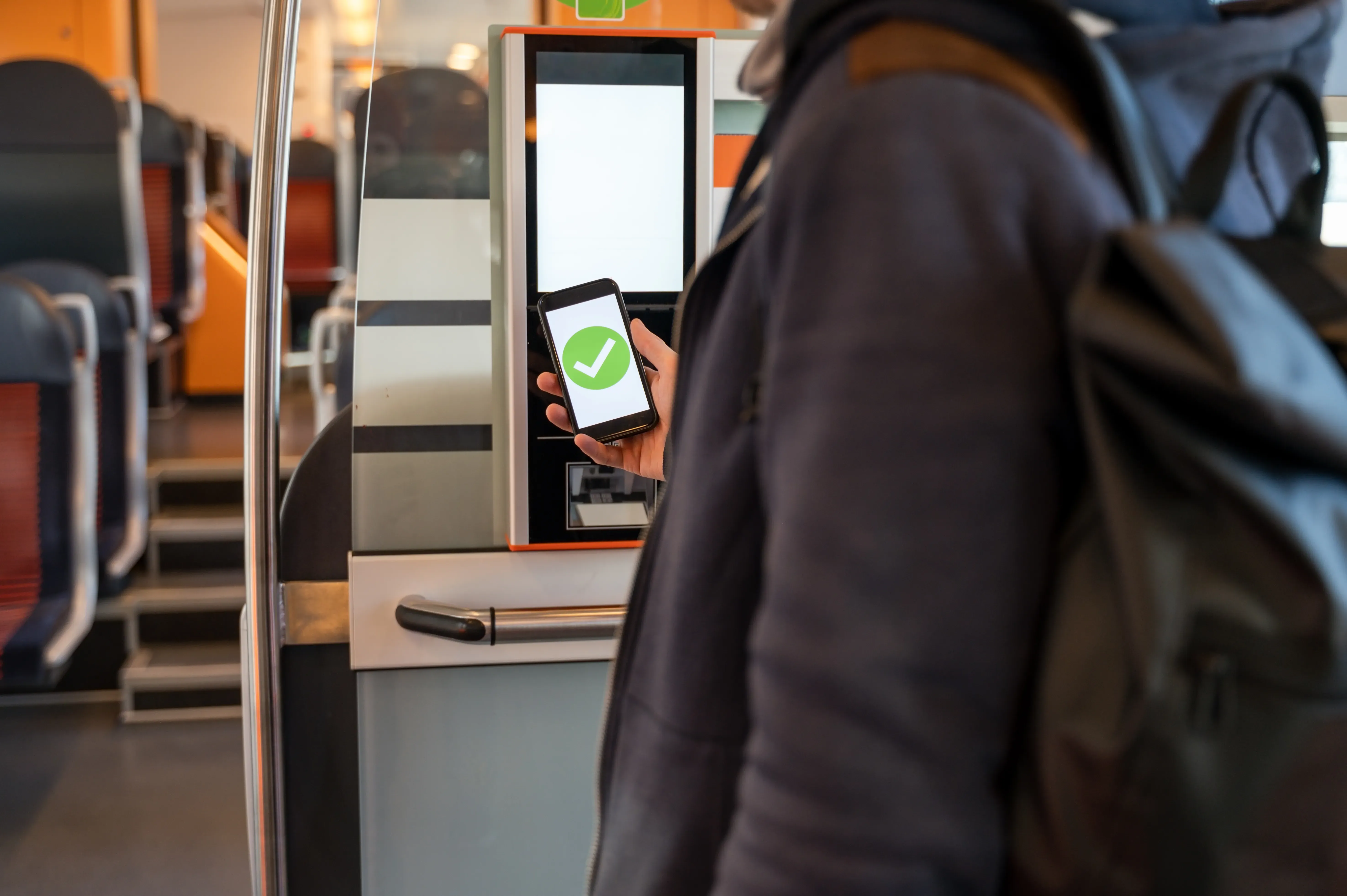
At the start of our trip, we need to decide how to get to our destination. We can choose to travel by plane, train, bus, ferry, or cruise ship. We need tickets for all modes of transportation, and until now we’ve always printed them out on paper. But that’s no longer necessary, because e-tickets are now available for various modes of transportation. These are electronic tickets that can be stored on a smartphone, for example. Both airline and train tickets can be downloaded electronically as PDF documents via email. You can also book bus tickets digitally via the DB Navigator app.
In addition, more and more ferry and cruise companies are offering digital services such as e-tickets, apps, and online check-in. The advantage of e-tickets is that they eliminate the hassle of searching for tickets during inspections and enable them to be scanned quickly. To scan a ticket, either a QR code or an NFC-enabled smartphone must be held up to the reader. Although QR codes are often used instead of traditional tickets, they can only be reliably recognised in sufficient lighting. In low ambient light, reading the QR code may be difficult or even impossible. Reading via NFC, on the other hand, works regardless of lighting conditions and is therefore possible even in dark environments.
Digital Documents
Once we have decided how to get to our destination, we need to make sure we have all the necessary documents. These include, for example, an ID card, a passport, a visa if required, a health insurance card, and a vaccination record. RFID technology is used particularly for important personal documents that can be used to prove one’s identity. NFC is based on RFID technology and represents a special form of contactless data transmission. Both technologies enable the contactless transfer of information between devices. The main difference, however, is that NFC only works over a very short distance (1–4 cm), while RFID has a greater range.
Electronic ID Card
For example, there is the electronic ID card, which allows you to verify your identity digitally. It is equipped with an RFID chip that stores personal data. Using a compatible reader and the eID-Software AusweisApp, we can read this data on various computers. In this How2, we will show you how to read the ID card on a Windows computer.
Electronic Visa
In some countries, you have the option of applying for an electronic visa, also known as an e-visa. The entire application process takes place online, so you submit your application details and documents, such as your passport, electronically. This means that you do not need to submit your passport or other personal documents to the consulate in person, nor do you need to complete the visa application form there. This saves a lot of time and effort. The visa is then sent directly to your email address.
BUT: Each country sets its own rules for applying for an e-visa! Therefore, it is important to familiarise yourself with the rules and requirements of your chosen country and ensure that your chosen border crossing point accepts e-visas.
Electronic Passport
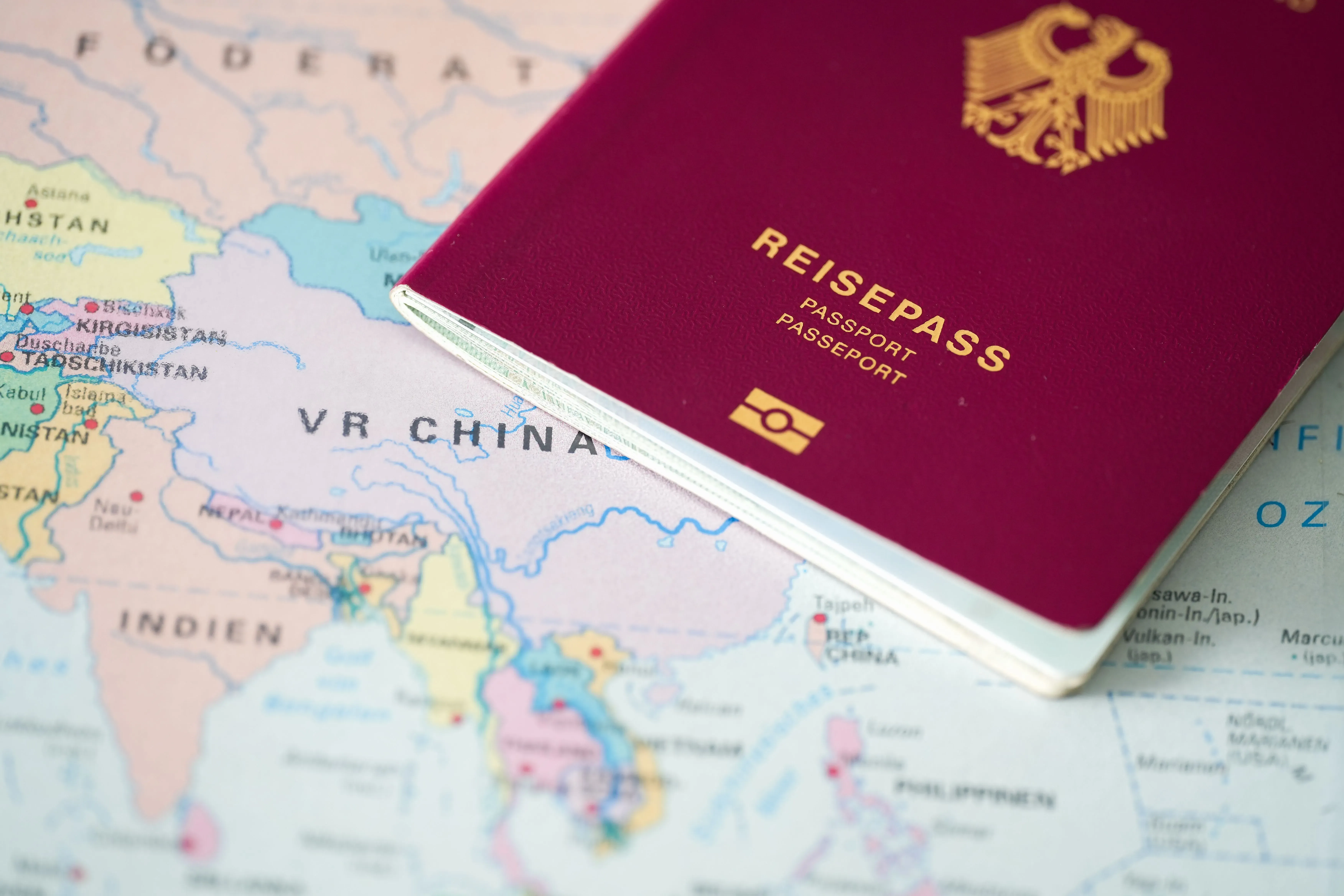
In addition to the electronic ID card, there is also the electronic passport (ePass). It was introduced in Germany on 1 November 2005. Since 1 November 2007, the ePass has contained not only the holder's personal data and passport details, such as the passport number, date of issue and period of validity, but also their biometric features. These include a facial image and two fingerprints. A new version of the ePass has been issued since 1 March 2017. This version is based on RFID (Radio Frequency Identification) technology. Unlike traditional passports, the new ePass contains an integrated RFID chip that stores the passport holder’s personal and biometric data, as well as document-related information. You can read about the benefits of the ePass in the next section.
ePassport Security
Particularly because of the biometric data it contains, the e-passport is considered highly secure and is designed to provide greater protection against identity theft, fraud, and passport forgery. As a result, paper photos are no longer accepted, and only digital photos are permitted. This ensures that the image is not distorted by the passport’s physical structure and that the passport holder remains easily recognizable over time.
The protection of sensitive data stored on the RFID chip must also be ensured to safeguard the passport holder’s identity. While personal and document-related information can be viewed directly in the passport, biometric data is therefore stored in encrypted form on the chip to protect it from unauthorized access. In addition, special readers are required to read the data from the e-passport, and in Germany these are available only to certain government agencies such as police, border, and customs authorities. Further information on this can be found in the section of this information text titled “RFID Readers“.
Furthermore, the Federal Office for Information Security has developed various security mechanisms to protect the data stored on German electronic identity documents.
An important security mechanism is Basic Access Control (BAC). It prevents the e-passport’s RFID chip from being read without authorization and without direct access. This makes it more difficult for people in the vicinity of the passport to secretly read and misuse the data it contains using a reader. Another security mechanism is Passive Authentication (PA), which verifies the authenticity and integrity of the data on the e-passport’s RFID chip. This mechanism allows for the rapid detection of counterfeit e-passports. Additionally, the special coating on the burgundy-colored protective cover also protects against unauthorized reading by third parties.
NFC & RFID at the airport
Check-in
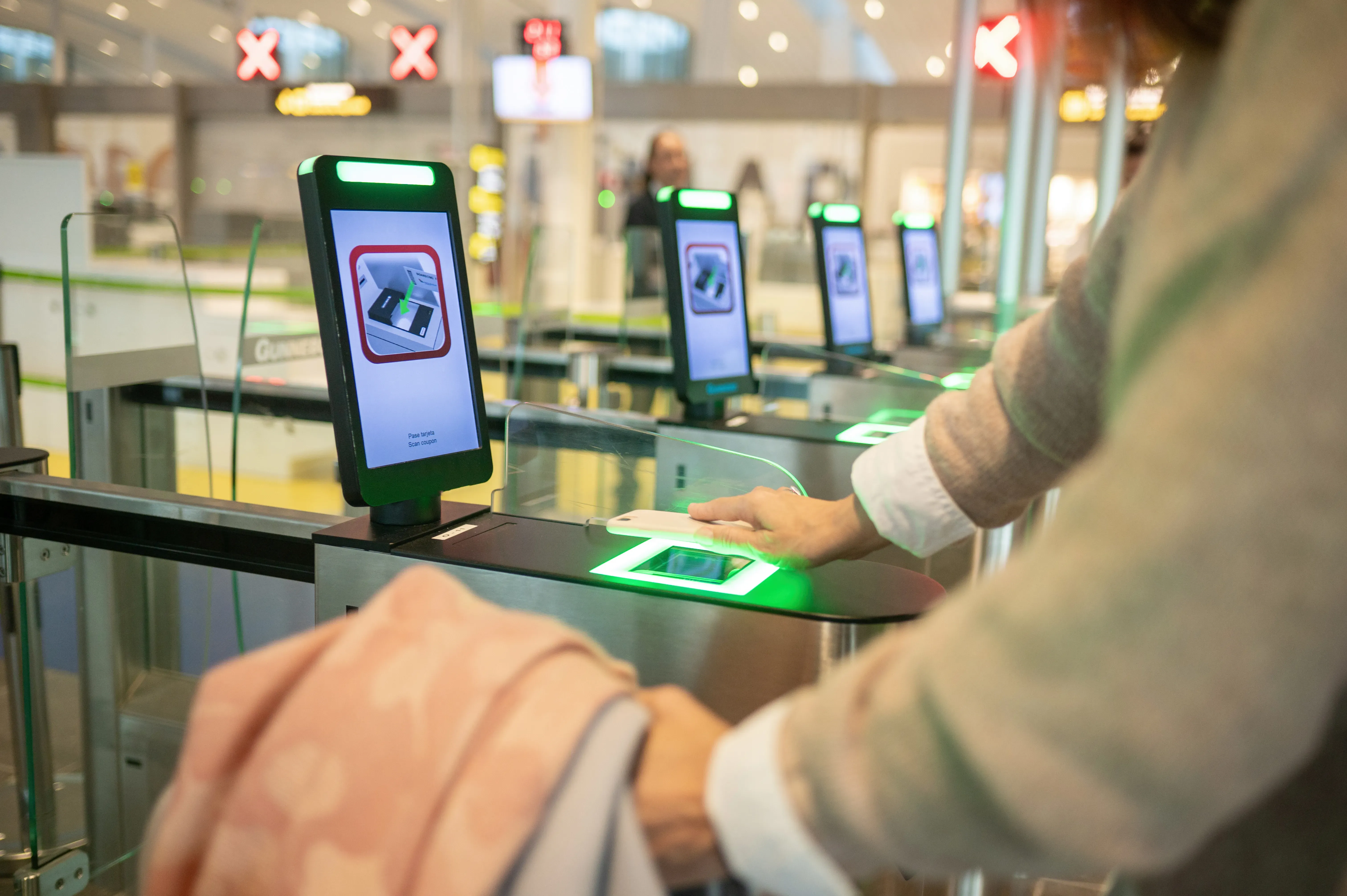
Right at the start of our trip, we have to check in for our flight online, present a digital boarding pass, and check our luggage. To streamline and speed up these processes, there are automated kiosks for self-check-in at the airport, as well as self-service bag drop stations for checking in luggage on your own. These kiosks use QR scanners, as well as NFC and RFID readers, to automatically read data from ID cards, e-passports and boarding passes. This means travellers can avoid relying on airport staff and long queues at the check-in counter. Now that we have checked in and checked our luggage, we will go through security screening using a metal detector and passport control.
Electronic Border Control
The introduction of the modern passport has been particularly beneficial for border control at airports and seaports. The biometric data makes it easier to verify the identity of the passport holder and significantly reduces the likelihood of someone travelling with a stolen or forged passport. For travellers leaving the EU and non-EU citizens, border control at the airport is mandatory and can involve long waiting times. Here, too, automated entry clearance checkpoints (eGates) reduce waiting times. Travel documents are verified automatically, eliminating the need for manual checks by airport staff. Border control is automated via a self-service kiosk, where travellers can scan their own documents. All they have to do is place their e-passport on the reader. The reader captures the following information:
- Passport information
- Personal data
- Biometric data (facial images, fingerprints)
- Date of entry and exit
This digital registration replaces the stamp in the passport. This means that entries and exits are recorded and stored digitally. The machine then takes a photo of the face and compares it with the facial image in the e-passport. This is used to verify the authenticity and validity of the e-passport. If the biometric data from the scan matches that of the electronic passport, the gate opens and the border control is complete. Modern border control systems therefore enable travellers to be processed more efficiently, quickly and safely, while also digitally recording entries and exits at the external borders of the Schengen Area.
There are two different border control systems: the Entry-Exit System (EES) and EasyPASS. The EES applies only to non-EU citizens entering the Schengen Area for short stays of up to 90 days within a 180-day period. For citizens of the EU, Switzerland, and EEA countries, as well as travellers with a valid German residence permit (ages 12 and older), border control is conducted via EasyPASS. In both systems, entry and exit data are recorded digitally.
The eGates offer several advantages:
- Security at the EU's external borders will be improved
- Identity verification will be improved
- Identity fraud will be more difficult to commit and easier to detect
- Increased transparency and traceability regarding how long individuals have stayed in the Schengen Area
- Unauthorised extensions of stay will be detected and prevented
- Waiting times will be avoided
Despite the advantages of automated border controls, there are concerns regarding data protection and the central storage of biometric data. However, the data stored in the EES may only be accessed by authorized staff of national authorities and is subject to oversight by European and independent national data protection authorities. For more information, please visit the European Union website. Data collected through EasyPASS is generally deleted after 48 hours and stored for a maximum of 30 days only in exceptional cases. The reading of the data itself is also protected through the use of special RFID readers.
RFID Readers
Special RFID-based readers with authorization certificates are used during border controls. For these readers, either the Card Access Number (CAN) printed on the front or the Machine-Readable Zone (MRZ) printed on the back of the e-passport is required. To ensure that the biometric data of the ePassport cannot be read by unauthorized persons, the data can only be read by readers on which the Terminal Authentication (TA) protocol. Thus, the RFID chip only reveals the data if the reader can demonstrate explicit read authorization for precisely this data. RFID thus enables a straightforward, simple, fast, and secure organization of airport processes and border crossings. This is relevant not only for airport staff but also for us as travellers, as it allows us to begin our journey quickly and conveniently.
Travel Safety
Digital address tag
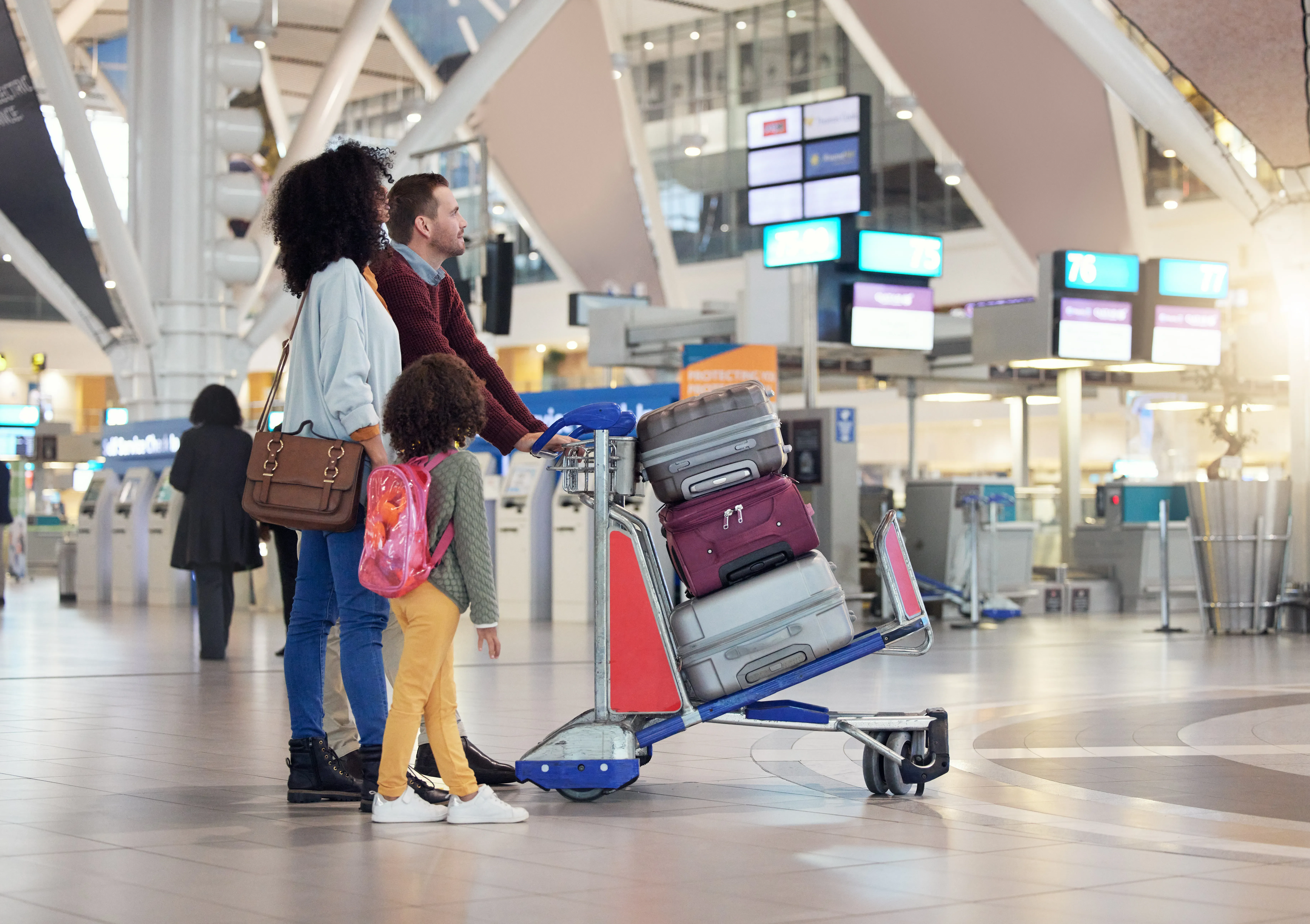
In addition to these safety measures, the secure identification and tracking of luggage items such as suitcases and bags is also important. Whether traveling by plane, bus, car, or ship, losing a piece of luggage is always frustrating. It can result in planned vacation activities having to be canceled or postponed during the first few days, and the trip can become more expensive due to the need to purchase replacement clothing and necessary items. However, it is particularly frustrating when a lost suitcase is found but the finder is unable to contact the owner. This can happen, for example, if the contact information is written on paper or engraved and has been so badly damaged by environmental factors such as rain that it is no longer legible. The Bagtap offers a solution. It is a digital address tag that can be attached to bags, backpacks, and school bags, or even to suitcases as a luggage strap. The bag tag contains an NFC chip with a URL. When you scan the NFC chip, you are directed to a profile where the owner's information is stored digitally. There is also a QR code on the digital tag that can be scanned as well.
Provide much information
With traditional luggage tags, such as those made of (synthetic) leather that feature a name or address label, only a limited amount of information can be included. In the Bagtap profile, in addition to the owner’s name, phone number, email address, and address, you can also enter details about the suitcase’s appearance. In addition, information about the travel route and destination can also be stored. If it is not possible to contact the owner directly, the accommodation where the person is checking in can be notified, for example. They can then inform the owner that the suitcase has been found.
Update anytime
One particular advantage of the digital tag is that the stored information can be updated quickly and easily. If outdated information is still listed on the tag, it is difficult or even impossible to locate the owner of the suitcase. If the information is recorded on paper, it can only be updated to a limited extent. Either the old information is written over - which can make it harder to read - or a new luggage tag is needed. For example, if you get a new cell phone number, you can easily update it in your Bagtap profile at any time.
Notify the owner
Contacting the owner can also be a challenge if a suitcase is lost. In addition to hoping that the suitcase is found, the mobile phone number on file must be entered correctly so that the owner can be contacted. To solve this problem, Bagtap offers a notification feature. This feature redirects the finder to an input page where they can enter a phone number, the luggage’s GPS location, and a short message, which are then sent to the owner via email.
Protect sensitive data
Although the Bagtap has many useful features, the question may still arise: How can you protect your data so that it isn’t visible to everyone? This problem can be solved using the NFC feature itself and a feature of the Bagtap profile. All information is only visible once the NFC tag is scanned. However, the scan only works over a very short distance. This means a person would have to hold their smartphone close to the Bagtap to see the data. Especially at the baggage claim area at the airport, the digital luggage tag makes it difficult to directly recognize the sensitive data. In contrast, contact information on conventional printed luggage tags is easier to read. Additionally, the Bagtap Profile offers the option to hide the stored data from others or modify it at any time.
Electronic Health Record
We also need to protect our health while traveling. To do this, it is important that, in the event of a medical emergency, local doctors can access our medical records so they can make the correct diagnosis and prescribe the right medications. Our medical history, lab results, and medication plans can also be accessed abroad via the electronic health record (ePA) and the electronic vaccination record. The European Union is developing the digital infrastructure MyHealth@EU to enable doctors abroad to access this information. This further advances the digitisation of healthcare, ensuring that medical assistance can be obtained even when abroad. The electronic vaccination record also allows us to:
- Store vaccination records digitally,
- identify and catch up on missed vaccinations more quickly,
- and receive reminders for vaccination appointments.
Digital dog tag
In addition to ensuring the safety of our luggage and our own well-being, it is especially crucial for dog owners to ensure the safety of their four-legged friends — it's essential for them to be able to embark on the trip at all. We’ve all heard horror stories about dogs being loaded onto the wrong plane, running away due to stress at the airport or getting lost while on holiday chasing cats or squirrels. As owners, we need a long-term solution that will ensure our dog can be quickly identified if he gets lost, and that our contact details can be accessed immediately. There are many different dog tags available on the market. First, we need to decide on a brand, then choose a colour and determine our budget. The choice of material is also important, as this affects the comfort and weight of the tag. We also need to consider whether the size of the tag or the noise it makes will hinder our dog while it is running and playing, and whether it can be comfortably attached to the collar or harness.
However, one problem with all dog tags is that there is often only room for a limited amount of information. We usually engrave the dog’s name, our address and our mobile number on the tag. However, there isn’t enough space to engrave an additional mobile number. But what if we can’t be reached because our battery is dead or we don’t have an internet connection?
That’s why we need a way to enter multiple phone numbers. Additionally, some dogs don’t like being touched on the ears or other parts of their body. There must also be a description explaining how to approach the dog. It can be particularly difficult for inexperienced people to approach a dog because they don’t know how to behave.
Provide much information
A digital dog tag like Dogtap allows us to create a comprehensive online profile for our furry friend, where we can store a wide range of information, such as their name, appearance, personality, microchip and Tasso numbers, as well as health records and contact information for the owner and veterinarian. Additionally, you can describe how to interact with the dog to make handling the dog easier and to facilitate its return to the owner.
To ensure that the stored data about our dog can be understood anywhere in the world, you can also have all information translated into English.
Create a missing dog poster
Nevertheless, the first question many people ask when they see a dog wandering around without an owner is, “Is he lost, or is his owner nearby?” Precisely because of this uncertainty, the person who finds the dog might assume it’s just a normal walk and not offer to help. As soon as you realize your dog is missing, you can create a missing dog poster.
Scan quickly & easily
All information can be viewed by simply scanning the NFC tag or QR code. Additionally, when the NFC tag is scanned, the owner can be contacted via the notification feature, just like with Bagtap. A particular advantage for data protection is that you can control which information others are allowed to see.
NFC in Hotels
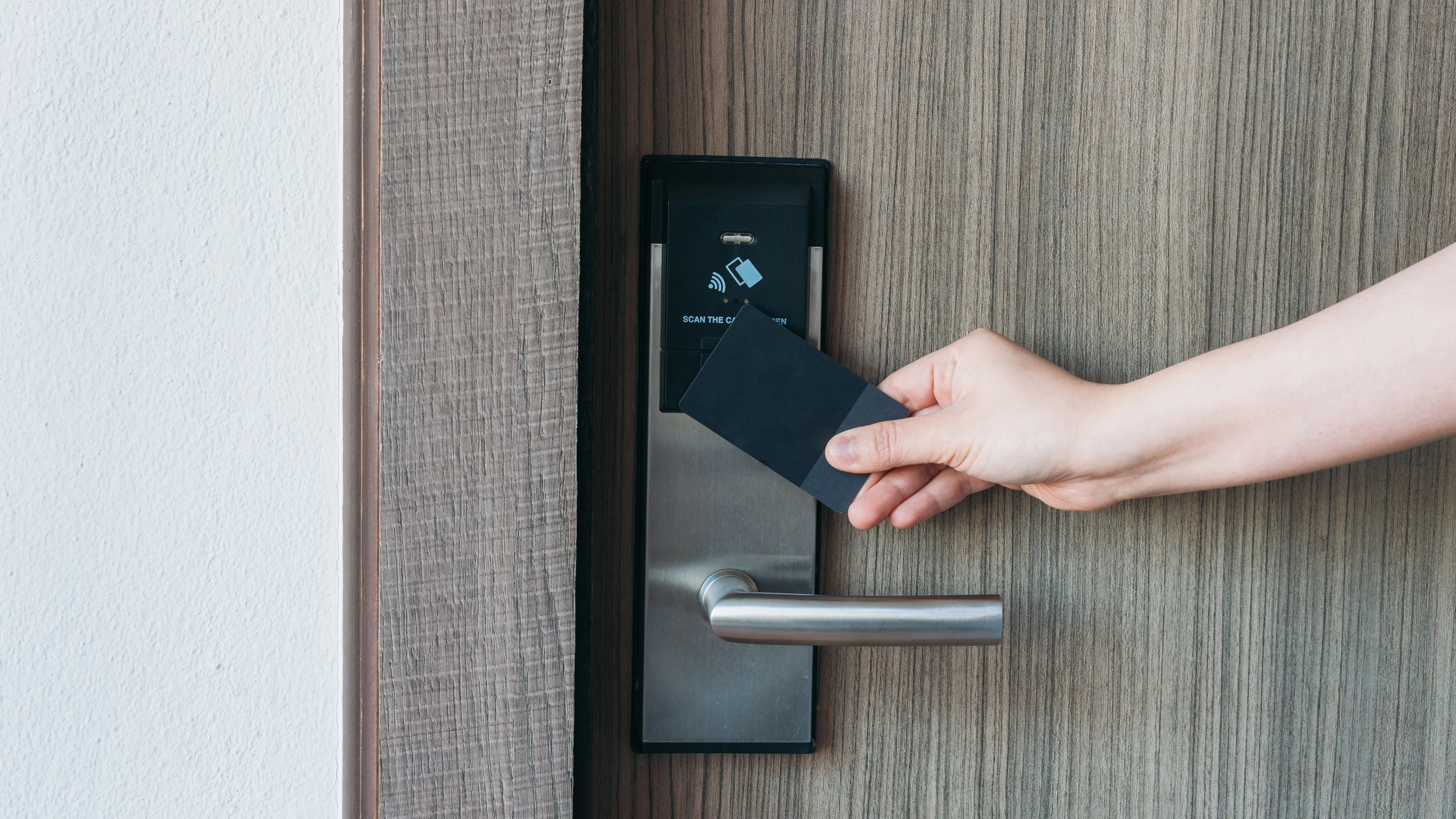
After a long, tiring trip, the first thing you want to do when you arrive at your destination is head straight to your accommodation. You will notice a difference as soon as you check in. In the past, when we went to the reception desk, the receptionist would verify the reservation and hand over the room key. At hotels with a high volume of guests, long queues quickly formed in front of the reception desk. However, with the help of NFC technology, these queues can be avoided.
NFC door locks
Hotels are increasingly using NFC door locks, which can be opened with an NFC card or an NFC-enabled smartphone. This technology enables hotel room keys to be sent directly to guests’ smartphones before they even arrive. With Hotelbird's Wallet Key functionality guests receive a verified room key on their smartphone after checking in. Guests can then add the key to their iOS or Android device's Wallet and hold it up to the door lock to open the door. The Wallet Key feature is based on NFC technology and therefore requires neither an app nor an internet connection. One advantage of NFC door locks is that the risk of losing the key is significantly reduced because a physical key is no longer necessary.
Digital Hotel Information
In addition, instructions for operating in-room amenities, such as the coffee maker or television, as well as information on how to use the elevator or fire extinguisher, can be stored on an NFC sticker or NFC magnet. However, NFC tags don’t always have enough storage space to provide visitors with all the important information. The NFC-URL service offers a possible solution to this problem. A single web address is stored on the NFC chip. When scanned with a smartphone, this leads to a landing page that bundles all important links in one place, such as the hotel website, social media profiles, and the restaurant menu.
Contactless payments abroad
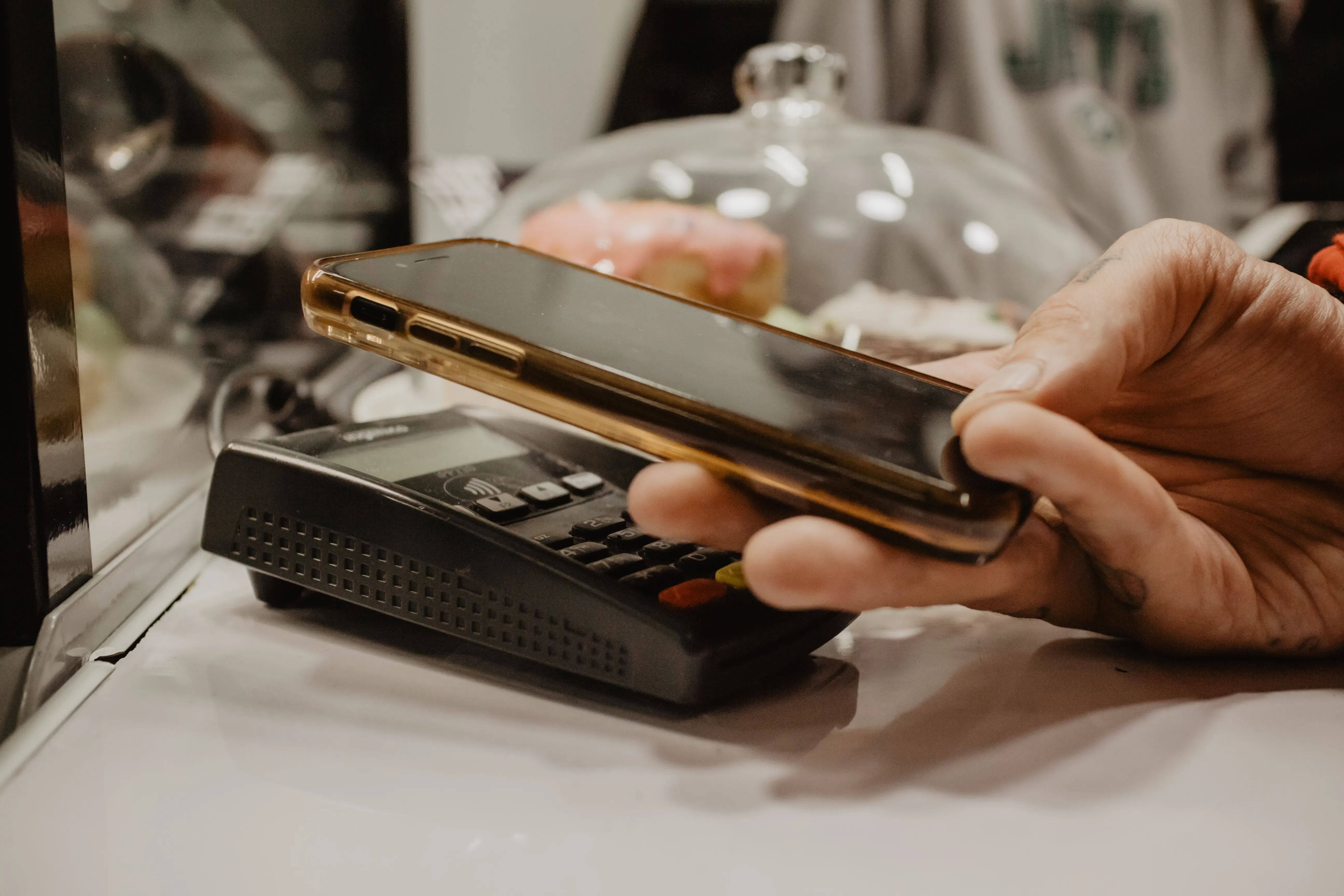
In addition to booking your flight, packing your suitcase, and reserving a hotel, planning a vacation also involves finding out about the accepted currency and payment options in your destination country. In the past, people would order the necessary currency from their bank before the trip or exchange it immediately upon arrival, for example at the airport. Today, it is no longer necessary to carry large amounts of cash abroad, as more and more countries are moving toward cashless payments. In Sweden, for example, even very small amounts are paid by card, and cash is no longer accepted by smaller shops, parking meters, and public transportation. The same applies to the other Scandinavian countries, as well as the Netherlands and the United Kingdom.
As a result, contactless payment using a debit or credit card or a smartphone is becoming an increasingly common method. NFC enables fast, hygienic, and cashless payments by simply holding a bank card or smartphone briefly in front of an NFC reader. The payment information is transmitted to the reader in encrypted form. To make payments via smartphone using NFC, iPhone users can use the Apple Pay app and Android users can use Google Pay.
In this article, we take a closer look at how payments via Apple Pay and Google Pay work.
Digital Entrance Ticket
Tickets for museums, theaters, soccer games, and various other attractions are also becoming increasingly digital. When booking, you always have the option to download the tickets as a PDF or save them to your smartphone’s digital wallet. For iOS, tickets can be loaded into Apple Wallet, and for Android, into Google Wallet. Upon entry, simply hold the top of your smartphone with the ticket against the reader. This also helps avoid long lines, so nothing stands in the way of your visit!
Conclusion
In summary, RFID and NFC make traveling significantly more convenient, efficient, faster, and safer. Whether it’s ticket checks on the bus, border control at the airport, or identifying our luggage, these technologies enable the smooth handling of many everyday travel processes. In particular, the use of NFC in hotels and for payment transactions reduces wait times and enhances security. In addition, we have all our information, tickets, and IDs at a glance on our smartphones and don’t need to carry around all our documents in paper form. At the same time, aspects such as data protection and data security should also be taken into account, since sensitive information is stored and processed digitally. Nevertheless, the advantages clearly outweigh the disadvantages: travelers benefit from greater flexibility, less stress, and an overall more modern travel experience.
RFID and NFC are thus key components of the digital transformation in tourism - and will become even more important in the future.